Pole Power Strategy
1. Overview
The pole power strategy module uses intelligent automatic control strategies to achieve fine control of terminal power supply. Support is based on the following trigger conditions:
- Sensors: can pass different sensors and status parameters. Commonly used are brightness, illuminance, traffic sensors, etc.
- Time triggering: Timing control down to the minute level
- Latitude and longitude trigger: Dynamically adjusts based on sunrise/sunset times
It is suitable for various scenarios that require fine control of the terminal power supply.
A pole power supply is a power distribution device installed on pole structures (such as streetlight poles, surveillance poles, or signal poles) to provide stable electrical power to external terminal equipment. The device supports both direct current (DC) and alternating current (AC) output modes, which can be configured according to the application scenario and terminal equipment requirements. Its main functions include:
- Providing power output that meets the rated parameters of the terminal equipment;
- Featuring basic protection functions such as overload, short-circuit, and over-voltage protection;
2. Function introduction
2.1 List of Strategies
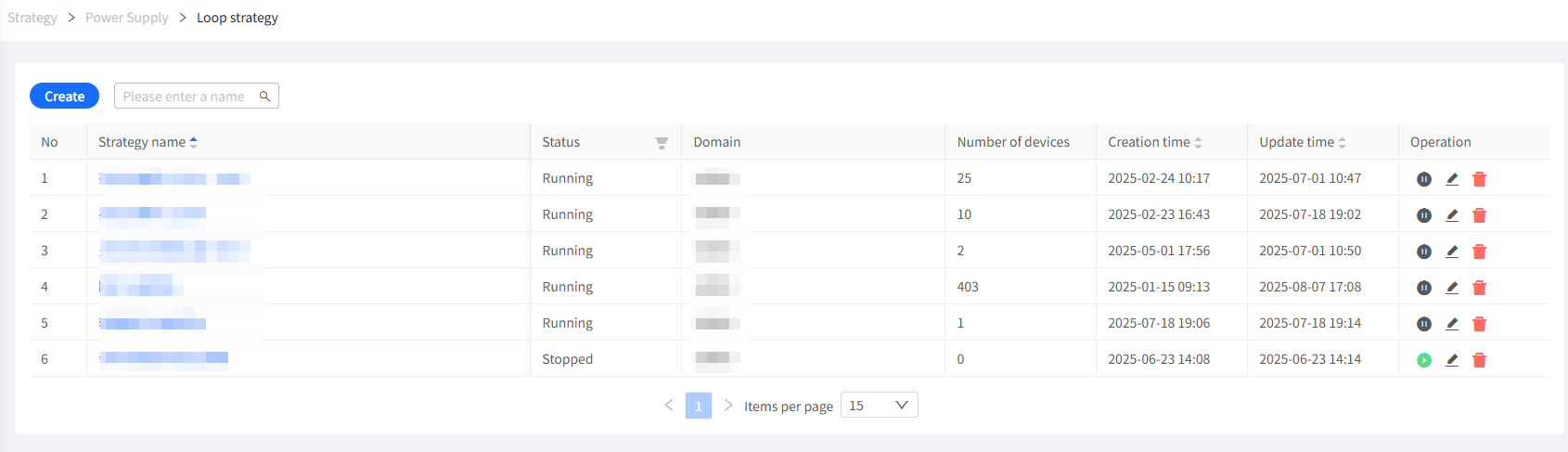
The list displays all pole power terminal strategies added by users under the current domain and subdomains.
2.1.1 Procedure
- After logging in to the system, select the
Smart Strategymodule in the system menu to enter. - In the menu item on the left, click
Pole Power Strategyto enter the strategy list.
2.1.2 Interface description
- Pagination displays all strategies (by default, in order of strategy name)
- Quick search bar (supports fuzzy query of strategy name)
- Status filter (enabled/disabled)
- List displays key information:
- Strategy Name: Supports editing
- Status: Current strategy status, supports filtering by status
- Domain: Current strategy domain
- Device Count: Number of pole power supply terminals associated with the strategy
- Create Time: Display the time the strategy was created, supports sorting by time
- Update Time: Display the time the strategy configuration was last updated, supports sorting by time
- Quick Operations: Display the operations that can be performed on the current strategy
 :Rename the strategy
 :Delete the current strategy
 :Enable the current strategy
 :Disable the current strategy
2.2 Create Strategy
2.2.1 Operation Steps
- After logging in to the system, select the
Smart Strategymodule in the system menu to enter. - In the menu item on the left, click
Pole Power Strategyto enter the strategy list. - Click the "Create" button in the upper left corner of the page, enter the creation page.
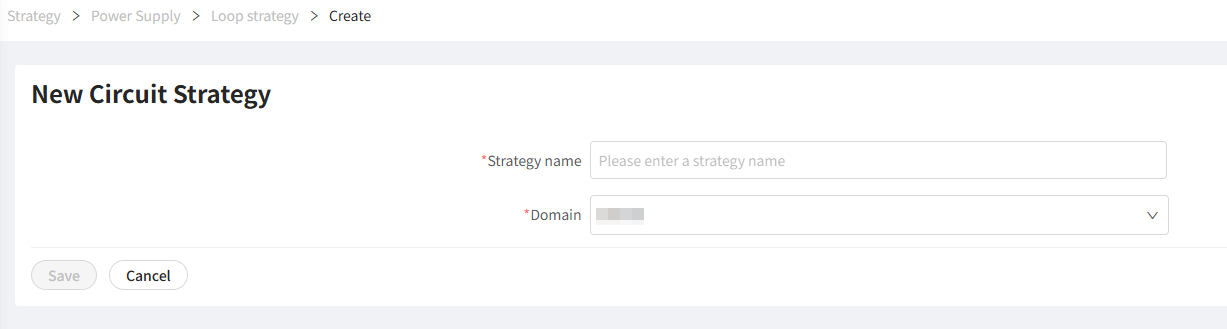
- Follow the prompts on the page to complete the strategy name and domain selection, click the "Save" button, and enter the strategy details page.
2.3 Strategy Details
This section is used to view the current strategy execution configuration and preview effects.
2.3.1 Interface Description
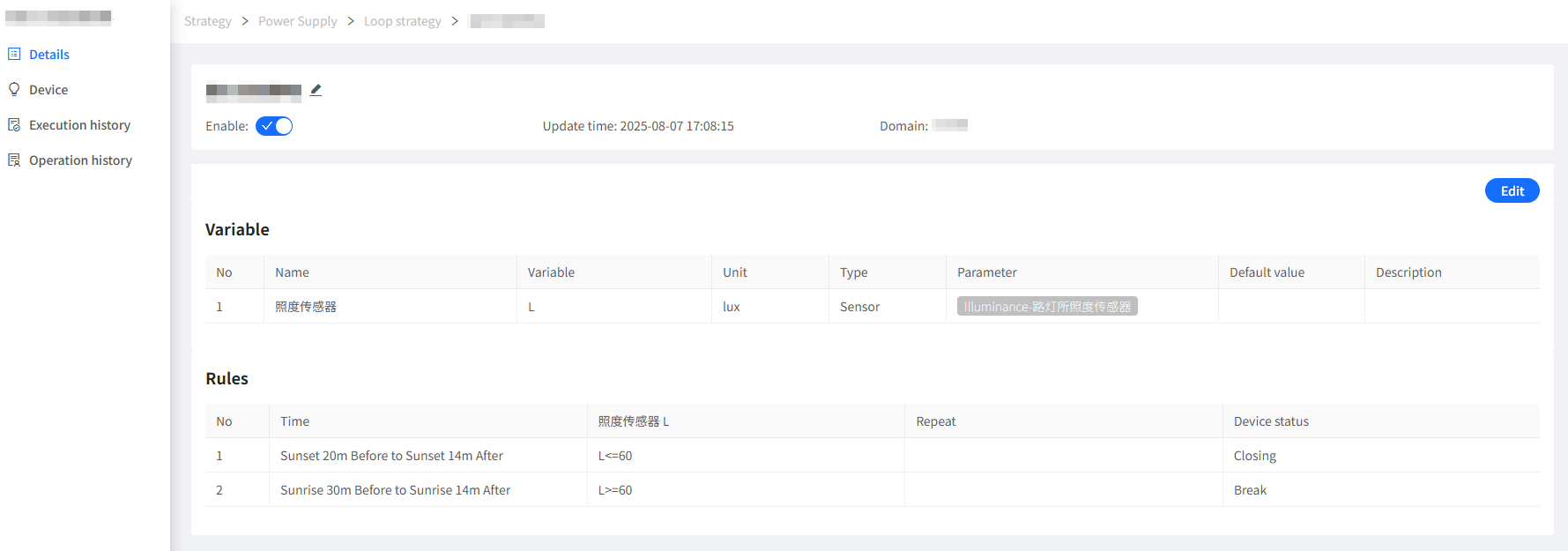
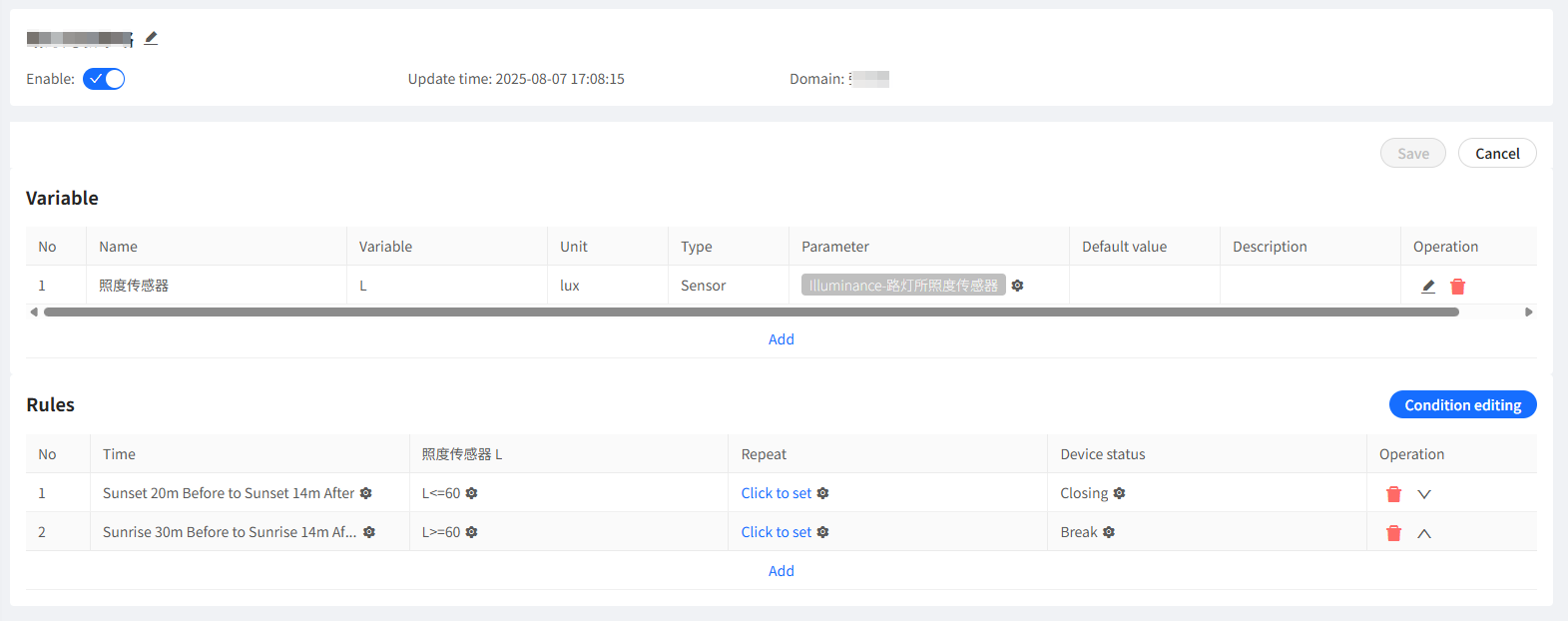
- Basic Information Area
- Strategy Name: Supports editing
- Status: Current strategy status, supports enabling and disabling the current strategy
- Domain: Current strategy domain
- Update Time: Display the time the strategy configuration was last updated, supports sorting by time
- Variable Area: Displays the related variable parameters defined in the current strategy
- Variable Name: The name defined by the user to mark the variable
- Variable Name: The variable identifier defined by the user in the strategy parameters, used to reference the variable value in the strategy
- Unit: The unit of the variable value, such as %, lux, Celsius degrees, etc., mainly used for identification, not affecting strategy calculation
- Type: Current variable type, currently supports two types
- Constant: The variable value will not change after the strategy is defined
- Sensor: The variable value is determined by the sensor real-time status
- Parameters: Depending on the above variable type, the meaning is different
- Constant: When the variable type is constant, it means the constant parameter value
- Sensor: When the variable type is sensor, you need to select the specific sensor and sensor status parameter
- Default Value: Current variable default value
- Description: Detailed description of the variable, helping users understand
- Rule Area: Lists the execution conditions and status parameters in the current strategy
- Trigger Conditions: Users can add multiple execution conditions, including:
- Variable area variable parameter status
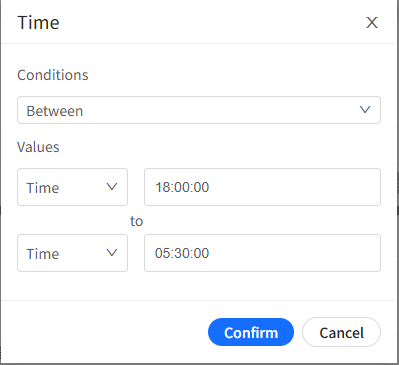
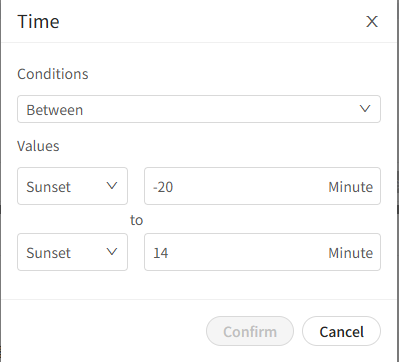
- Time Parameters: Support absolute time or astronomical time (offset adjustable) time range
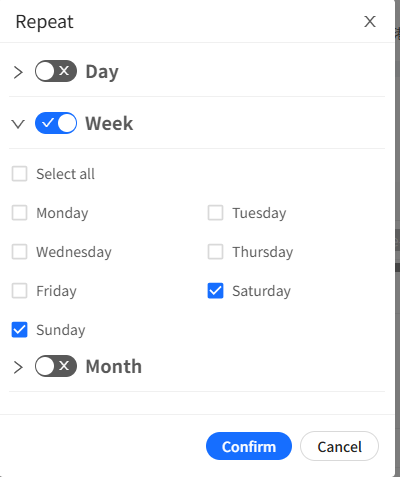
- Execution Cycle: Strategy execution cycle, default is effective for all dates, supports user-defined month, day, week execution at a certain time point
- Instruction Parameters: Pole power supply terminal execution instruction, On or Off
- Trigger Conditions: Users can add multiple execution conditions, including:
2.3.2 Configure Variables
-
Click the "Edit" button in the strategy parameter area to enter the strategy edit state.
-
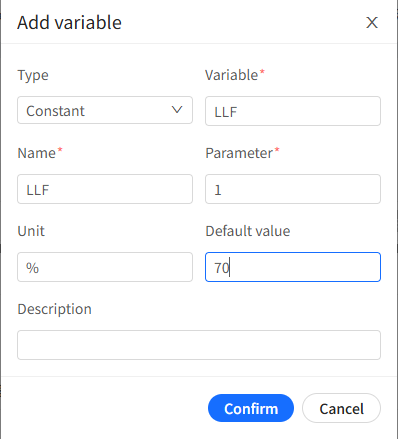
Add constant type variables: In the variable area, select the add button to pop up the add variable interface.
- Variable type selects constant
- Input variable basic information: name, variable name, unit, default value
- Constant Value: Enter the constant value or select the associated sensor device and parameter as prompted
-
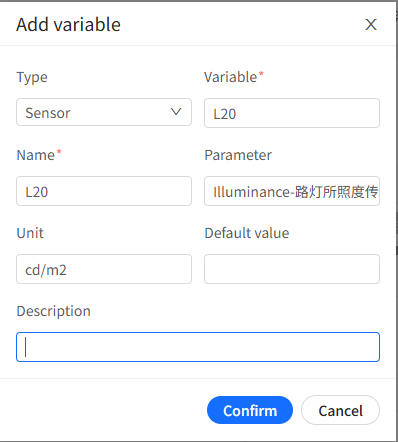
Add sensor type variables: In the variable area, select the add button to pop up the add variable interface.
- Variable type selects sensor
- Input variable basic information: name, variable name, unit, default value
- Sensor Parameters: Follow the interface guide to select the specific sensor and sensor status parameter
2.3.3 Variable Examples
The following are some common variable examples in tunnel lighting scenarios:
| Type | Variable | Name | Unit | Description |
|---|---|---|---|---|
| Sensor | Q | Vehicle Flow | veh/(h.ln) | Vehicle flow sensor |
| Sensor | L20 | Outside Brightness | cd/m2 | Outside brightness sensor |
| Sensor | DI | Switch Status | N/A | Switch sensor (switch) |
| Constant | Lth1 | Entry Brightness | cd/m2 | Tunnel entry brightness design value |
| Constant | LLF | Maintenance Coefficient | System maintenance coefficient, which needs to be updated periodically according to the design requirements |
2.3.4 Configure Strategy Rules
-
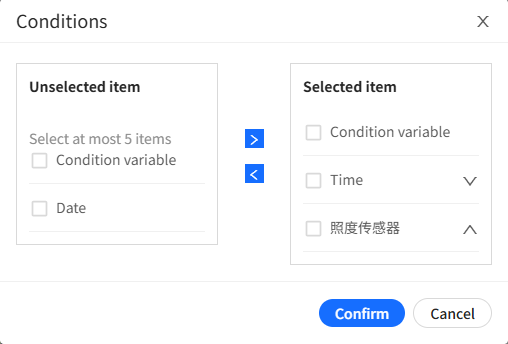
Configure available trigger conditions: Click the Condition Edit button in the upper right corner of the specification area, and then select the rules conditions that need to be used.
-
Configure trigger rules: Select the add button, add a rule, and then configure the corresponding trigger conditions according to the different types of condition parameters.

-
Configure the device status under the specified rule conditions

All strategy parameter changes need to be saved to take effect.
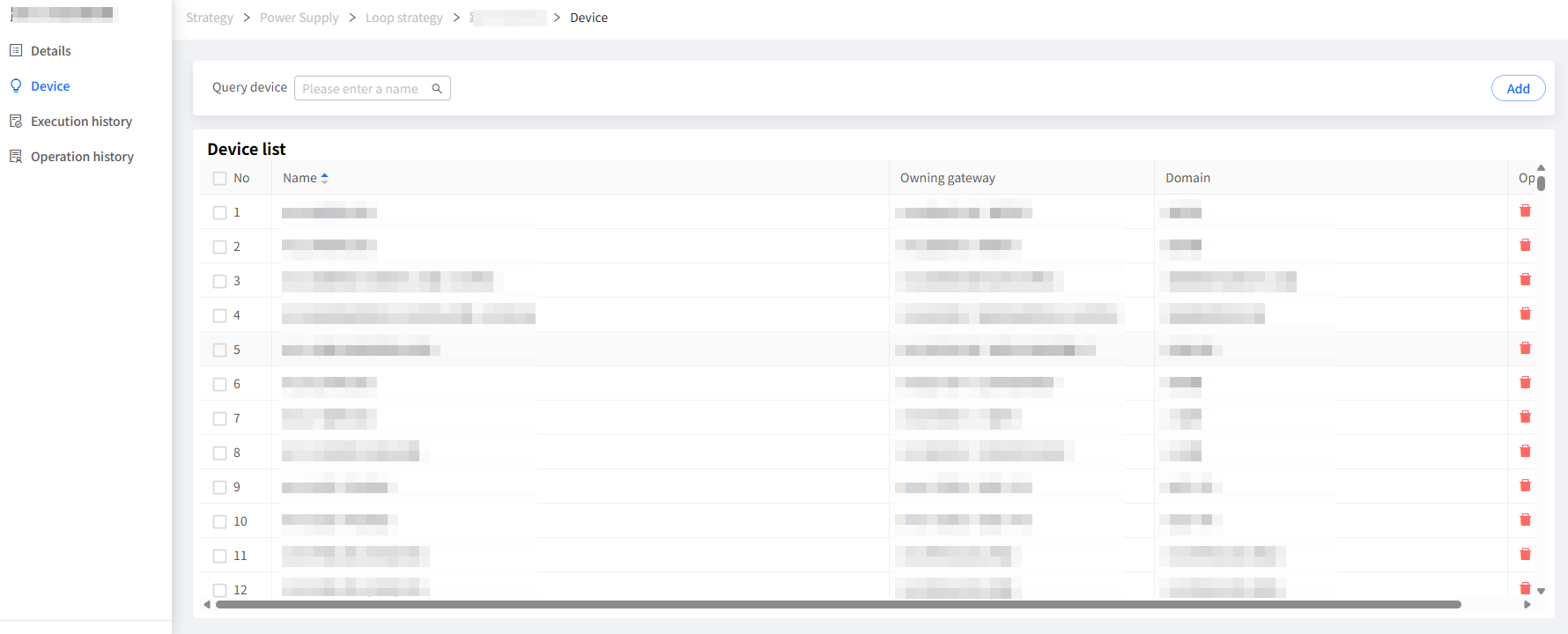
2.4 Devices
The current strategy is configured to execute on the specified device collection, and the execution device is the pole power supply terminal.
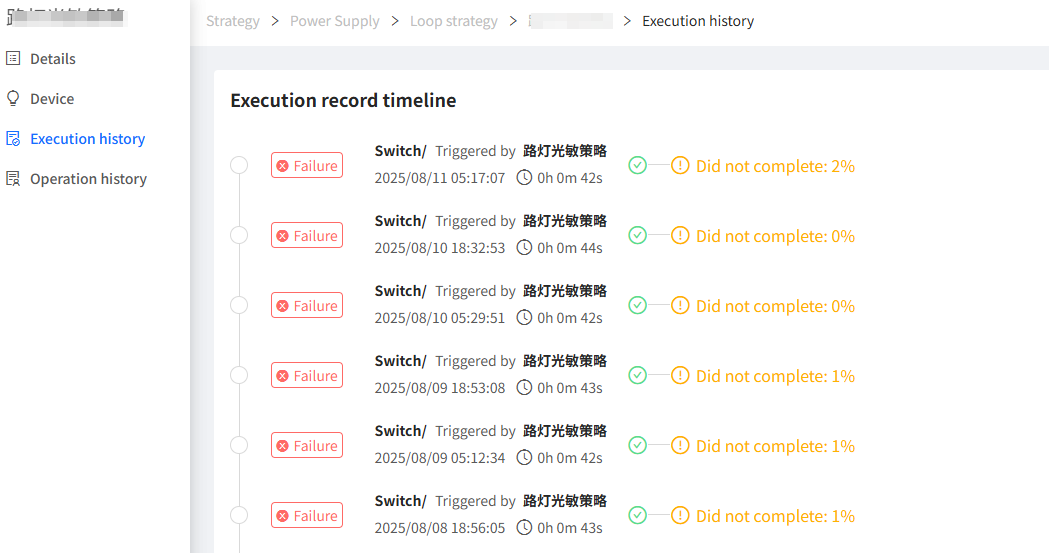
2.5 Execution History
The execution history of the current strategy is displayed here, including the execution time, execution status, execution results, and other information.
2.6 Operation History
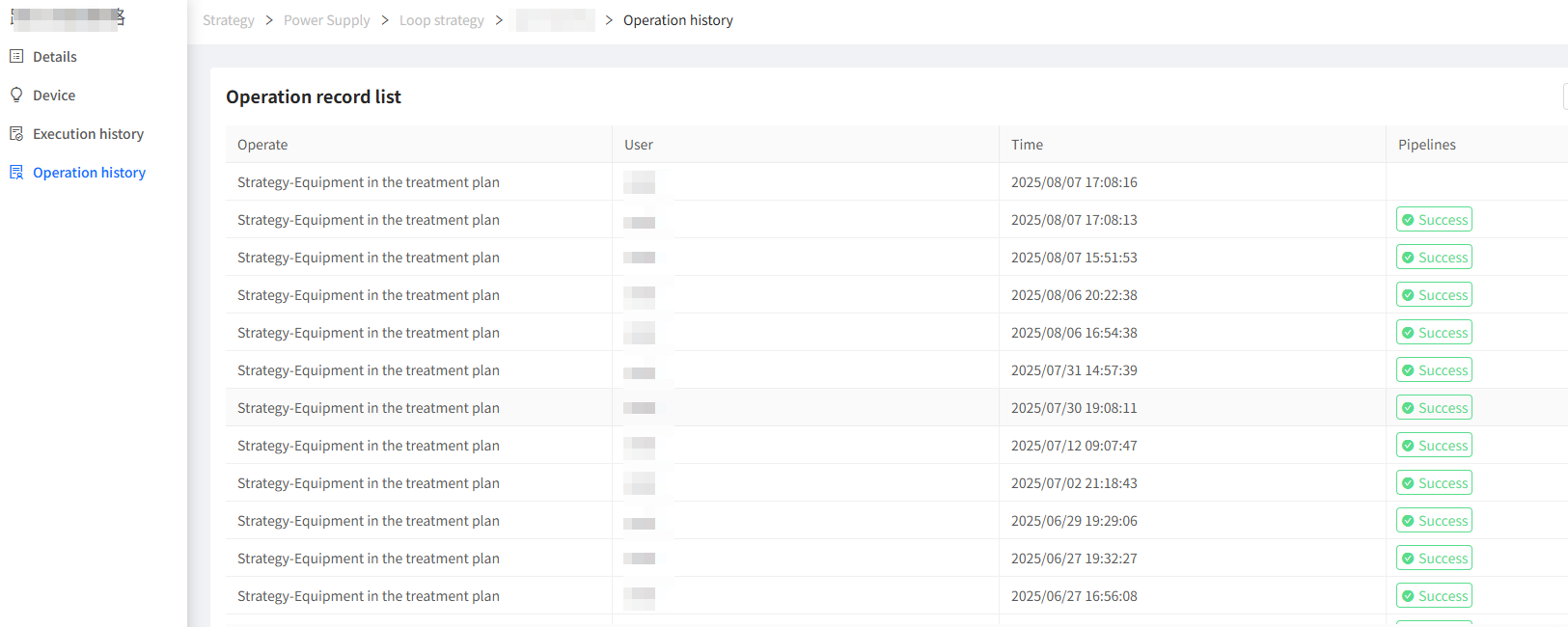
The operation history of the current strategy is displayed here, including the operator, operation time, operation content, and other information.